
Mattress Stain Cleaning at Home: Safe, Simple Steps
A mattress collects sweat, skin flakes and dust every night. With Riyadh’s dust and summer heat, yellow stains and odours show up sooner than you expect. The most common mistake when cleaning a mattress at home is flooding it with water and cleaner, which leaves moisture in the filling and makes the problem bigger.
This guide gives you clear steps for removing stains from a mattress: vacuuming properly, dealing with sweat, urine, blood and coffee, drying, and knowing when you need a professional. One rule runs through every step: blot the stain, don’t soak it.
Dust mites and vacuuming both sides
Dust mites are tiny creatures that feed on the skin flakes we shed every day, and their particles are often found in pillows, mattresses, carpets and upholstered furniture, according to the American College of Allergy, Asthma and Immunology (ACAAI). These particles are one of the most common allergy triggers inside the home.
The same college says mites die when humidity falls below 50%, and that vacuuming and dusting alone are not enough to remove them. So good cleaning takes more than one step: vacuuming, a protective cover, washing the bedding, and drying and airing.
- Strip all sheets, covers and pillows off the bed.
- Fit the upholstery attachment and run it slowly over the whole surface, then along the edges and seams where dust collects, as the Purple mattress-cleaning guide advises.
- Go over the side you sleep on more than once.
- If the mattress label allows flipping, turn it over with a second person’s help and vacuum the other side. Some mattresses are built to be used on one side only, so check the care label.
MedlinePlus recommends vacuuming once a week with a HEPA-filter vacuum, because a regular vacuum can stir dust back into the air, and wearing a mask while cleaning if you have allergies.
Removing stains: blot, don’t soak
Before treating any stain, follow these general rules:
- Deal with the stain as soon as possible. Press a clean, dry cloth onto it to pull out as much liquid as you can, and don’t rub, as Tuft & Needle support recommends.
- Use a small amount of mild detergent with water. Wet the cloth, not the mattress, then dab the stain gently.
- Test any solution on a hidden spot first. Heat sets stains, so don’t use hot water or hot air on a stain that hasn’t come out yet, according to New Mexico State University’s stain removal guide.
- Don’t remove the sewn-on mattress cover to wash it. Tuft & Needle support says its cover isn’t meant to be removed; check your own mattress label.
Sweat and yellowing
Yellow stains usually come from built-up sweat. Dab them with a mild, diluted detergent on a cloth. If an old stain has changed the fabric’s colour, Kansas State University’s stain removal guide mentions white vinegar for old stains. Put a little on the cloth, then dab with clean water and blot dry.
Urine
Urine leaves an odour if it reaches the filling. Blot straight away, pressing again and again with dry towels or cloths. The Kansas State guide mentions a product containing enzymes for urine stains. Follow the product label and apply a small amount on the cloth, not a heavy spray.
Blood
Cold water is the basis for treating blood, because hot water sets it, according to the University of Georgia’s blood stain guide. For stubborn stains, the same guide mentions a few drops of 3% hydrogen peroxide for one to three minutes, then rinsing. On a mattress, put the drops on the stain only after testing a hidden spot, then dab with a cloth dampened with cold water and blot dry.
Coffee and tea
Arabic coffee and tea are among the most common bed stains in our homes. The Kansas State guide says to start with cool water. Blot up the liquid first, then dab with cold water and a little mild detergent, then with clean water, and blot dry.
Safety while cleaning
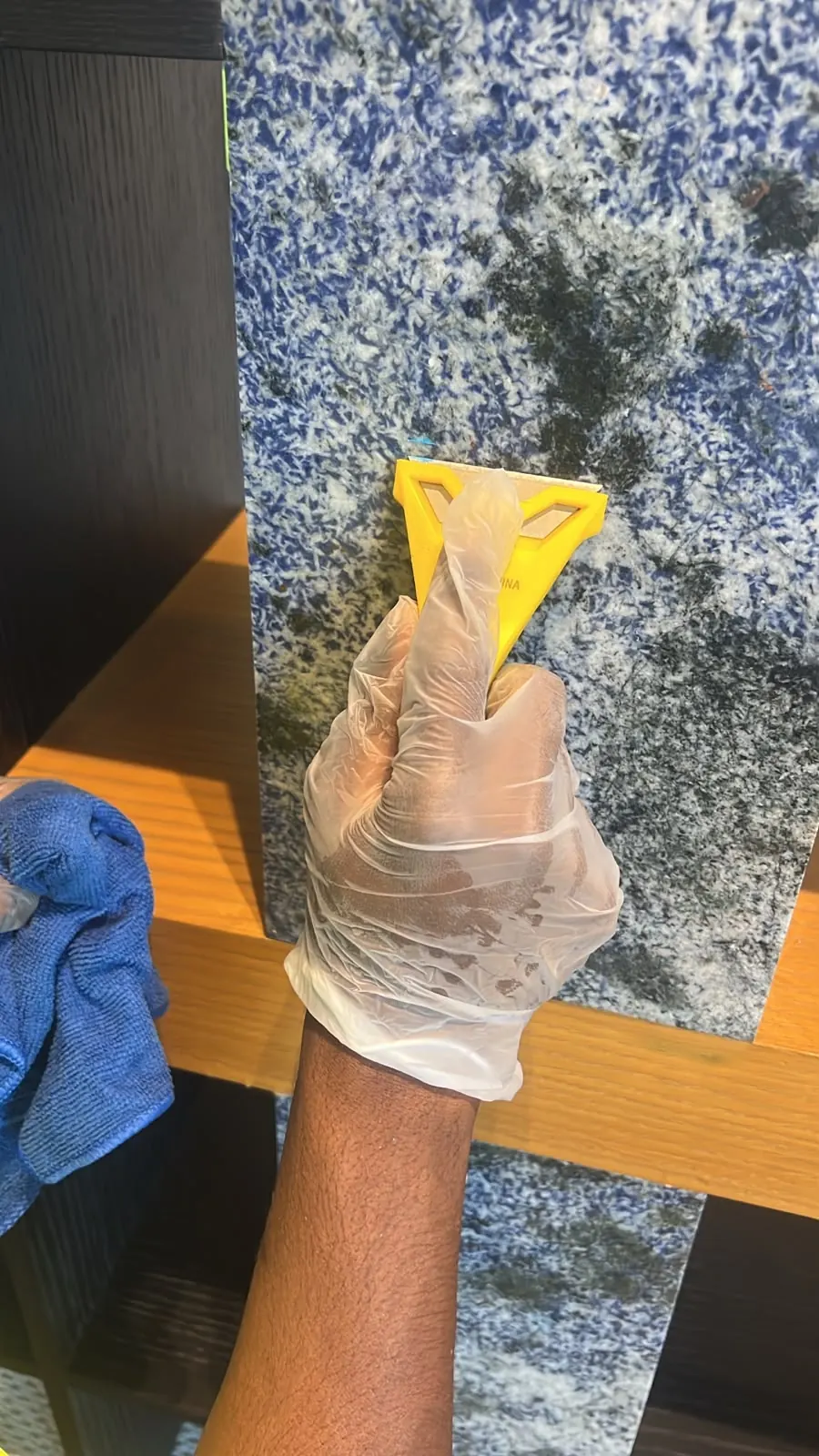
- Wear gloves when using any cleaner, and open the window for ventilation.
- Never mix products. The New Mexico State guide warns especially against mixing ammonia with chlorine bleach. Read why you should never mix cleaning chemicals.
- Use each product only as its label says, and don’t double the amount.
- Keep children off the bed until it’s dry, and store cleaners out of their reach.
- If your housemaid does the cleaning, explain these rules to her and make clear which product is used for which stain.
- If someone swallows a cleaner or has trouble breathing, call the ambulance on 997.
Drying and prevention
Drying matters more than the cleaning itself
⚠️ Moisture trapped inside a mattress is a good environment for mould. The Centers for Disease Control and Prevention (CDC) advises drying anything that gets wet fully and quickly, within 24 to 48 hours, and says soaked carpet and upholstery that can’t be dried quickly should be removed or replaced.
- Run the air conditioner or a dehumidifier. The CDC advises keeping indoor humidity at 50% or lower.
- Point a fan at the damp area, or open the window for airflow.
- Be careful with direct sun. The Purple guide advises against putting its mattresses in direct sunlight, and Riyadh’s summer heat is harsh. Check your mattress label before taking it outside.
- Don’t put the bedding back until the area is completely dry, as Tuft & Needle support recommends.
Protectors and washing bedding
- Encase the mattress and pillows in zippered dust-mite-proof covers, as MedlinePlus and the ACAAI recommend.
- A waterproof protector prevents most stains and means less vacuuming, according to the Purple guide, and it’s easier to wash than cleaning the mattress.
- Wash sheets and pillowcases weekly in hot water between 54.4 and 60°C, according to MedlinePlus, if the care label allows. Some fabrics can’t take that heat.
- After a dust storm, vacuum the mattress and wash the bedding, and see the guide to cleaning your home after a dust storm.
The same logic for upholstered fabric is in reading sofa fabric cleaning codes and carpet cleaning steps at home.
When do you need a professional?
- An odour that stays after cleaning and drying.
- A large stain that has soaked deep into the filling.
- Mould spots or a damp smell.
- Many mattresses in a large villa, or someone at home with a strong allergy.
The Purple guide notes that professional cleaning may be worth the cost when home methods aren’t enough, such as with lingering odours and stains, dust mites, and mould.
Frequently asked questions
How do I clean old stains from a mattress?
Start by vacuuming, then dab with a mild, diluted detergent on a cloth. For old sweat stains try a little white vinegar; for blood, cold water and then drops of 3% hydrogen peroxide after testing a hidden spot. If the stain is still there after two tries, don’t add more water; call a professional.
Can I wash a mattress with water?
Don’t soak it. A lot of water reaches the filling and is hard to dry, and the CDC advises drying anything wet within 24 to 48 hours. Use only a small amount on the cloth.
How often should I clean my mattress?
MedlinePlus recommends weekly vacuuming for people with dust allergies, and the Purple guide suggests a full clean every six months, with any spill treated straight away.
How do I get rid of dust mites in my bed?
Wash bedding weekly in hot water if the label allows, encase the mattress and pillows in dust-mite-proof covers, and keep room humidity at 50% or lower.
The bottom line
Cleaning a mattress at home is easy if you stick to three rules: vacuum regularly, blot the stain instead of soaking it, and dry it well. If a stain goes deeper than you can reach or a damp smell appears, don’t risk more water.
If you need help in your home or villa, see our cleaning service.