
Cleaning your home after a dust storm: steps in order
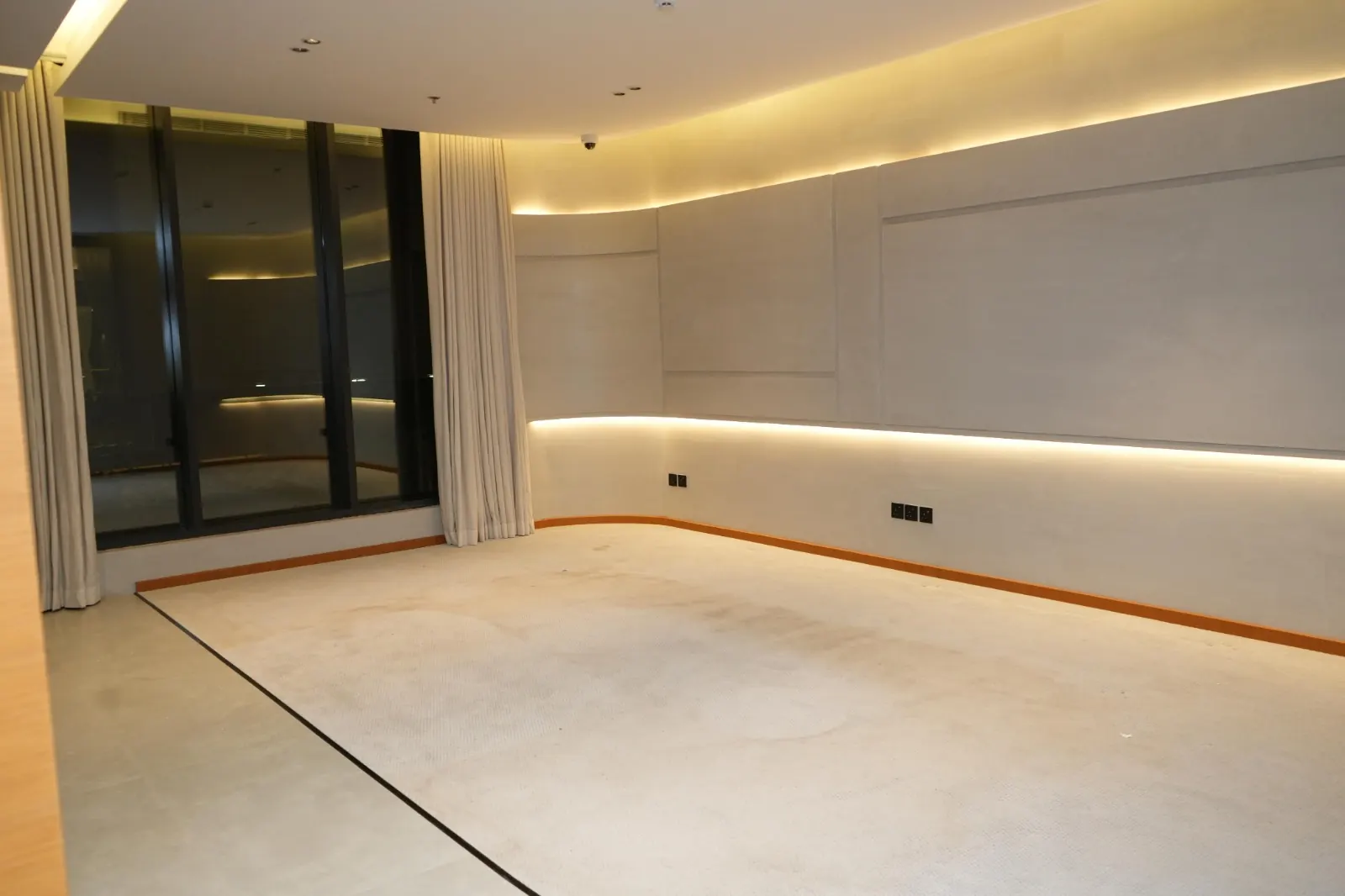
After every dust storm in Riyadh you find a fine layer of dust on floors, sofas and window ledges, even with the house shut. The same question comes up each time: how do you clean the house after a dust storm without turning the dust into mud on every surface, or sending it back into the air an hour later?
This guide gives you practical steps in order: what to do before the storm, when to start cleaning, which order to follow, and how to handle curtains, majlis seating, carpets, the yard, the roof, the car and the AC filters – with specific warnings for people with asthma and for children.
Before the storm: seal the house
The Ministry of Health advises closing doors and windows tightly to keep dust out of buildings, and following weather bulletins. The National Center of Meteorology posts alerts in its early-warning section, so keep an eye on it when dust-raising winds are expected. Every minute spent sealing up before the storm saves you an hour of cleaning after it.
- Close every window and door, including the roof door and the yard door.
- Put a rolled-up cloth or sealing tape along the bottom of doors and windows where dust usually gets in.
- Bring cushions, rugs and floor seating in from the yard, and cover outdoor furniture.
- Make sure the openings of the rooftop water tanks are closed.
- Keep children, older people and anyone with a chest condition indoors.
After the storm: wait until it settles
Don’t start cleaning while the wind is still carrying dust – everything you wipe will settle again. Wait until the wind drops and the air clears, then open the windows to air the house once the air outside is clear. After dust waves, the Ministry of Health recommends cleaning homes thoroughly, especially bedrooms, bedding and furniture.
A mask for anyone with asthma
According to the American Thoracic Society, children, older adults and people with chronic lung disease are more likely to develop symptoms after dust exposure. Ideally, someone with asthma should not do the cleaning. MedlinePlus advises wearing a mask when you clean the house, and says the person with asthma and their child should leave the house while others clean, if possible. The same society notes that a certified N95 mask works when it seals well against the face, and that simple cloth such as a shemagh or a scarf does not filter small particles.
Cleaning order: top to bottom
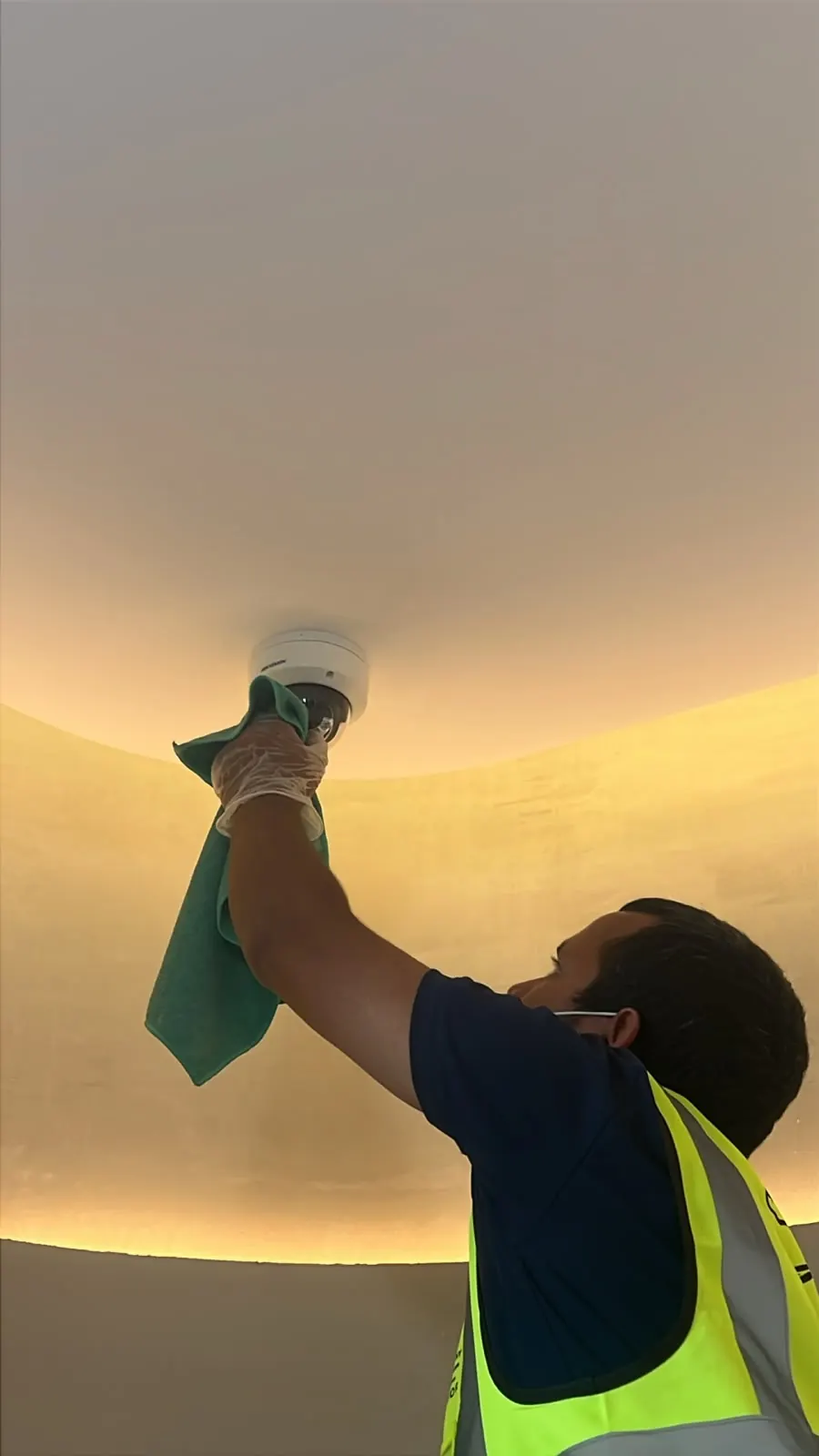
Dust falls downward. If you start with the floor and then clean the shelves, the dust lands back on the clean floor. Follow this order in each room:
- Fans, light fittings, the tops of wardrobes and door frames.
- Window ledges and window tracks.
- Shelves, tables and furniture tops.
- Sofas, floor seating and curtains.
- The floors last.
Dry dust first, then damp microfiber
Storm dust is very fine. Run a wet cloth over it and it turns into mud that smears the surface and gets into the joints between tiles and marble. So split the job into two stages:
- Remove the dry dust first with a vacuum and brush nozzle, or gather it with a dry microfiber cloth using slow strokes – no flicking.
- Then wipe with a damp microfiber cloth that is well wrung out, not wet. MedlinePlus advises removing dust with a damp cloth.
- Rinse or swap the cloth often, and change the rinse water as soon as it turns cloudy.
- Mop floors with a damp mop after vacuuming them, not before.
A vacuum with a HEPA filter, if you have one
MedlinePlus says a vacuum with a HEPA filter helps control the dust that vacuuming stirs up. If you don’t have one, use your regular vacuum, empty its canister outside the house, and clean its filter according to the manufacturer’s instructions.
Curtains, majlis cushions and carpets
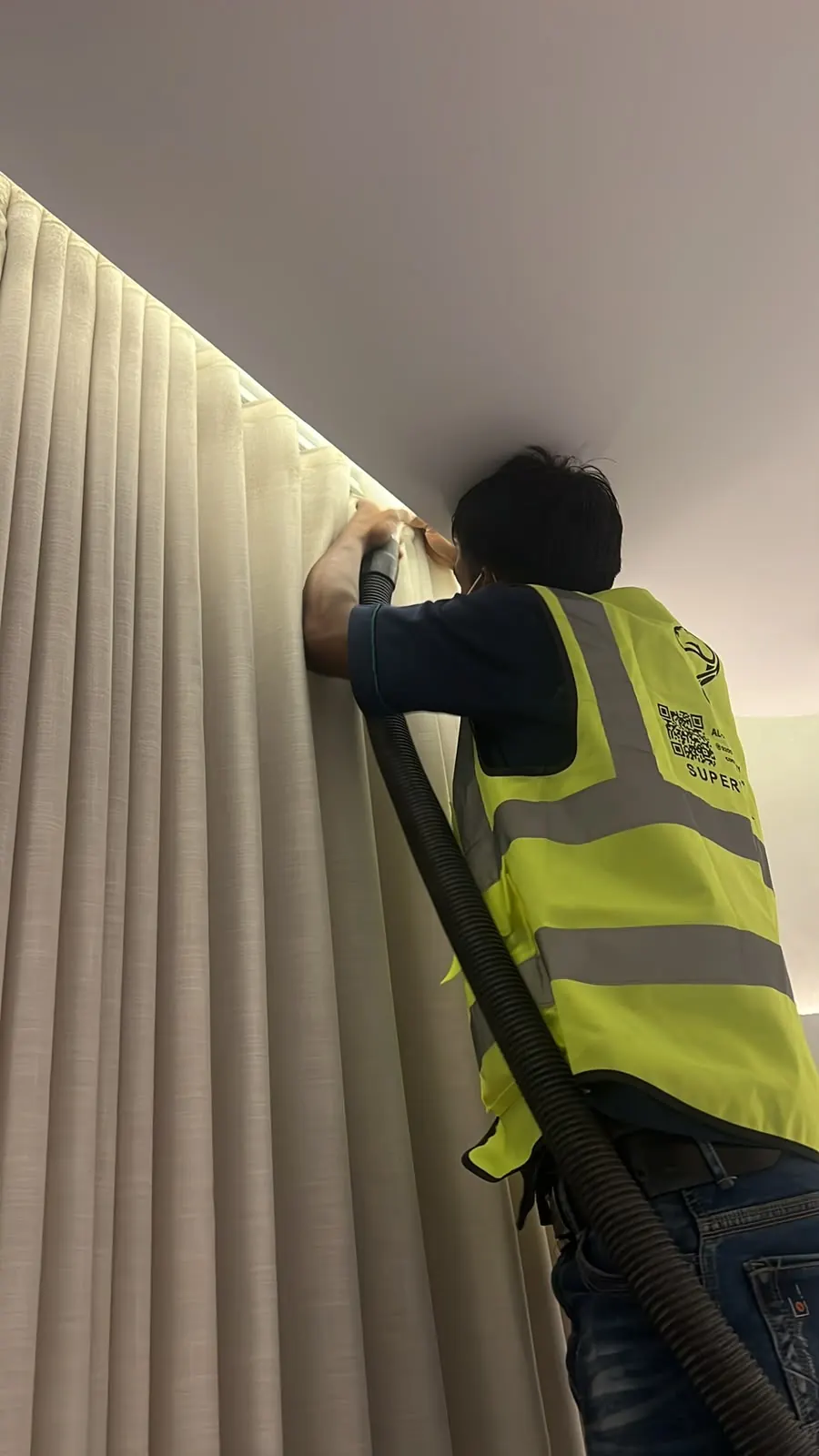
Fabric holds on to dust more than any other surface in the house, and majlis floor seating collects a lot of it.
- Curtains: vacuum with the brush nozzle from top to bottom, then wash whatever is washable according to the care label.
- Majlis seating and back cushions: vacuum with the upholstery nozzle in two directions, and beat small cushions outside, away from open doors.
- Don’t spray water on dusty fabric before vacuuming it – the dust turns into stains.
- Carpets: run the vacuum slowly in two crossing directions, and repeat in hallways and at the entrances.
- Bedding and pillows: MedlinePlus advises people with allergies to wash them in hot water between 54 and 60 °C, if the care label allows it.
For deep-cleaning steps for fabrics, see our majlis, sofa and carpet cleaning guide.
The yard, the roof and the car
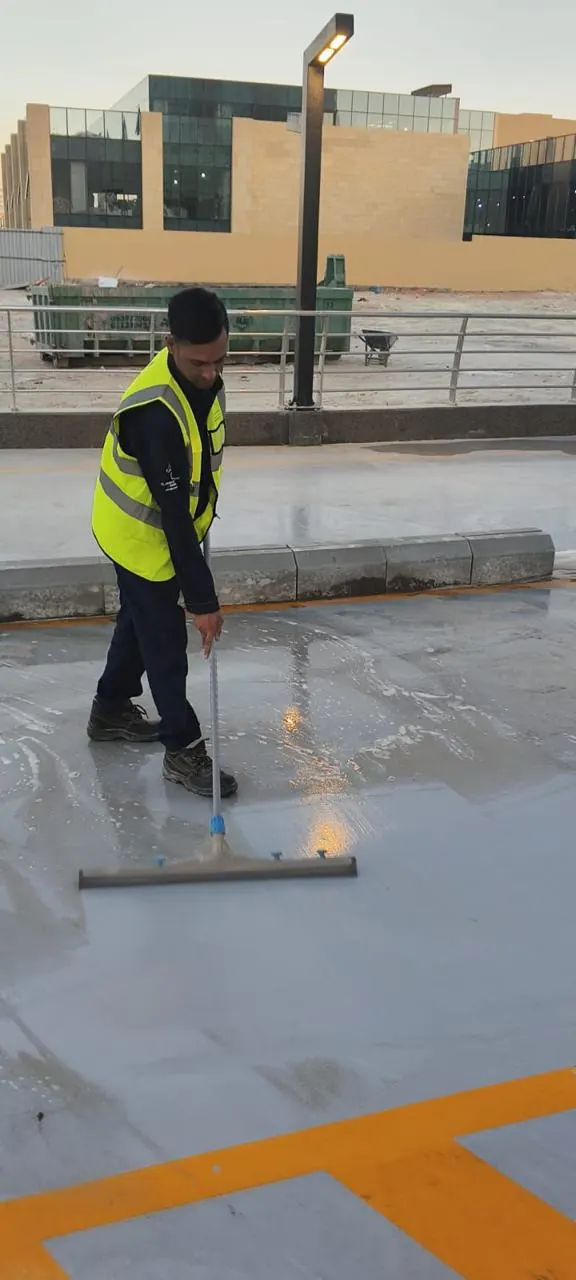
- Sweep the yard and the roof with a hand broom while wearing a mask, and bag the sand.
- Don’t hose fine dust into the drains – it turns into mud that can settle in the drain openings and block them.
- After sweeping, clear the sand that has collected around the roof drains.
- If you want to wash the tiles afterwards, use only a little water.
- The car: don’t wipe dust off the paint dry, because the sand scratches it. Rinse it off with water first, then wash, and vacuum the seats and floor mats inside.
When driving in dust, the Ministry of Health advises keeping the car windows closed, and NSW Health advises switching the car’s air intake to recirculate.
AC filters after the storm
The AC draws in room air all the time, so its filter fills up quickly after a storm. MedlinePlus says cooling systems should have filters that capture dust, and advises changing them often.
- Switch off the power to the AC before opening its cover.
- Take out the filter and look at it: if it has a grey coating, it needs cleaning.
- Wash or replace it according to the manufacturer’s instructions.
- Let it dry completely before putting it back.
For a full clean of the units, see our AC cleaning guide for Riyadh.
Safety: children and asthma
- Keep children out of the room being cleaned until the airborne dust settles.
- Anyone with asthma should follow their doctor’s instructions closely and use their medication, as the Ministry of Health advises.
- The American Thoracic Society notes that dust can cause or worsen coughing and wheezing.
- If you use a cleaning product in the water, never mix two products – see our guide to chemicals you should never mix.
- Keep cleaning products out of children’s reach, and show your housemaid how to use them.
⚠️ If anyone has severe shortness of breath or wheezing that doesn’t ease after their medication, call 997 or go to the nearest emergency department.
Frequently asked questions
When should I start cleaning the house after a dust storm?
Once the wind has dropped and the air has fully cleared. If you start while dust is still in the air, you will end up cleaning twice. Air the house first, then clean from top to bottom.
Should I wipe dust with a wet cloth or a dry one?
Both, in order. Remove the dry dust first with a vacuum or a dry cloth, then wipe with a wrung-out damp microfiber cloth. A wet cloth on heavy dust makes mud that smears the surface.
Should I run the AC during a dust storm?
The American Thoracic Society advises staying indoors with the windows closed and using air conditioning, and considering an air purifier with a HEPA filter. After the storm, check the AC filter and clean it.
How do I protect my child with asthma from dust?
Keep them indoors with the windows closed, keep them out of the room while you clean, and stick to the treatment plan their doctor gave you. If symptoms don’t settle, seek medical advice.
The short version
Cleaning after a storm gets easier with three rules: seal up well before it, wait until it settles, and clean from top to bottom – dry first, then damp. In large villas dust builds up in many hard-to-reach places; you’ll find the steps in our villa deep-cleaning guide.
If the house is large, or someone at home can’t be exposed to dust, you can book a team from our cleaning service.