
Cleaning kitchen grease: steps from range hood to oven
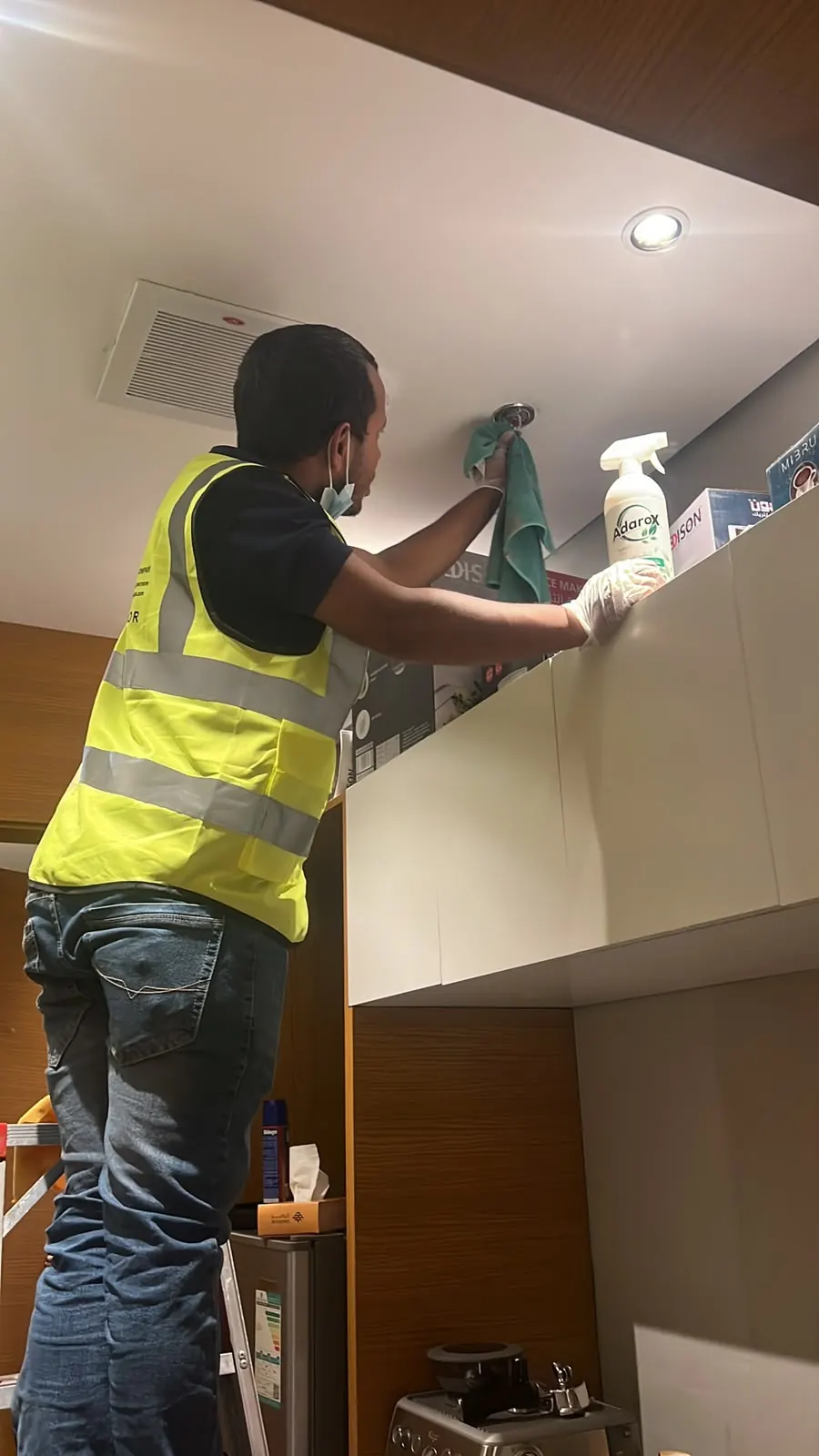
Kitchen grease doesn’t stay on the stove. Steam carries it to the range hood, the tiles and the cabinets, where dust sticks to it and turns it into a dark, sticky film – especially in Riyadh homes after dusty days. That’s why cleaning kitchen grease needs the right order and the right tools, not harder scrubbing.
This guide gives practical steps for each part: the range hood and its metal filters, the tiles behind the stove, cabinet fronts, the stovetop, the oven and stainless steel. It also covers what never to scrub with, oven-cleaner warnings and simple habits after each cooking session.
Order of work: top to bottom
Switch off the stove and hood and make sure every surface is cool. Then always start at the top: grease and dirty water run down as you clean, so if you start low you’ll be cleaning it twice.
- Tops of cabinets and the outside of the hood.
- Hood filters – put them in to soak first so they work while you clean the rest.
- Tiles and grout behind the stove.
- Cabinet fronts and handles.
- The stovetop.
- The oven.
- The floor, last.
The range hood and its metal filters
The filters
- Remove the filters as your appliance manual shows. Carbon (charcoal) filters can’t be washed – they’re replaced.
- Fill the sink about a third full with hot water, and add half a cup of baking soda and a little degreasing dish soap, as Proline’s guide to cleaning range hood filters describes. A degreaser suitable for metal can replace the soap – follow its label.
- Submerge the filters. The same source suggests soaking baffle filters for 10 to 15 minutes in this solution, and mesh filters for 20 to 30 minutes in warm soapy water, because grease lodges in the mesh.
- Scrub with a non-coarse brush, using an old toothbrush for the corners.
- Rinse with warm water and dry the filter thoroughly with a soft cloth before refitting it.
Very hot water burns, so wear gloves and use a brush rather than plunging your hands in. Samsung’s range hood cleaning guidance says the metal filter and grease drip tray can go in the dishwasher or be washed by hand in hot water with dish detergent, and that carbon filters should be replaced every six months to a year. Check your manual before putting any filter in the dishwasher.
The hood body
- Put a little liquid detergent on a soft, damp cloth.
- Wipe in the direction of the stainless steel grain to avoid scratches.
- Dry with a soft, dry cloth, and repeat if marks remain.
Tiles behind the stove and cabinet fronts
Tiles and grout
- Wipe off the surface layer with warm soapy water – the Washington State Department of Health recommends cleaning with soap and water in everyday situations.
- For hardened grease, spread a paste of baking soda and water on the grout and leave it for a while.
- Scrub the grout with a soft brush along the line.
- Wipe with a clean damp cloth to remove residue, then dry.
If the wall behind the stove is marble or natural stone, avoid vinegar, lemon and acidic cleaners, as MSI’s marble care guidance advises.
Cabinet fronts: gentle before strong
Wood, lacquered and high-gloss cabinets are more easily damaged by strong or abrasive products than tiles are.
- Use warm water with a little dish soap and a well-wrung microfibre cloth so water doesn’t get into the edges.
- Wipe, don’t scrub – repeat the wipe instead of pressing harder.
- On high-gloss fronts, never use scouring powder or a rough green scourer; they leave fine scratches that show in the light.
- Focus on the areas around handles and above the stove, which collect the most grease.
- Dry with a second, dry cloth.
- Test any new cleaner on a hidden spot first and check the cabinet maker’s care instructions.
The stovetop and the oven
Stovetop
- Wait until the stove is completely cool.
- Remove the grates and any removable burner caps and soak them in hot soapy water.
- Wipe the surface with a soapy cloth, and put baking soda paste on burnt-on spots.
- Rinse and dry, and make sure the burner caps are completely dry before refitting them.
For glass tops, follow the appliance manual and never use steel wool.
The oven and oven cleaner
Oven cleaners are among the strongest products in the kitchen. MedlinePlus says their harmful ingredient is corrosive alkalis, that their fumes can cause breathing difficulty and throat swelling, and that contact can burn the skin and cause severe eye pain.
- Read the product label and your oven manual first, and make sure your oven can take this kind of cleaner.
- Open the windows and switch on the hood before spraying.
- Wear gloves and safety glasses, and cover your arms.
- Keep children out of the kitchen and never leave the can within their reach.
- Spray only inside the oven, away from other surfaces, and keep to the contact time on the label.
- Wipe out with a damp cloth and rinse several times so no residue is left.
⚠️ If the product touches skin or eyes, the same source advises flushing with lots of water for at least 15 minutes. If someone breathes in the fumes, move them to fresh air immediately and call the ambulance on 997 if any symptoms appear. And don’t use bleach near oven cleaner – the Washington State Department of Health notes that bleach reacts with some oven cleaners.
Stainless steel, and what never to scrub with

Stainless steel on hoods, fridges and ovens shines easily – and scratches easily too.
- Wipe with a soft cloth and a little liquid detergent.
- Always wipe in the direction of the visible grain in the metal.
- Dry straight away with a soft, dry cloth so no water marks remain.
What never to use:
- Steel wool or metal scouring pads on stainless steel or gloss surfaces – Samsung’s guidance warns against them because they scratch.
- Chlorine-based or alcohol-based cleaners on stainless steel, according to the same guidance.
- Scouring powder on high-gloss or lacquered cabinets.
- Scrubbing against the grain of the metal.
To choose the right cleaner for each surface, read our guide to the pH of cleaning products.
Prevention after each cooking session
- Run the hood while you cook.
- Wipe grease splatter off the tiles and stove once it’s warm, not hot, before it hardens.
- Wipe the handles of cabinets near the stove with a soapy cloth.
- Check the hood filters every few weeks, and clean them every two to three months, or monthly if you fry a lot, as Proline suggests.
- Wash your hands with soap and water after handling cleaners, even if you wore gloves.
Frequently asked questions
How do I clean built-up grease off a range hood filter?
Soak it in hot water with degreasing dish soap and baking soda, then scrub with a non-coarse brush, rinse and dry it well. Mesh filters need a longer soak, and carbon filters can’t be washed – they’re replaced.
Can I use steel wool on stainless steel?
No. Steel wool scratches the surface and ruins the shine. Use a soft cloth with a little liquid detergent and wipe with the grain of the metal.
Are oven cleaner fumes dangerous?
Yes – they can cause breathing difficulty and throat swelling. Open the windows, wear gloves and safety glasses, and keep children out of the kitchen while you use it.
How do I get grease off high-gloss kitchen cabinets without scratching them?
With warm water, a little dish soap and a microfibre cloth. Wipe rather than scrub, dry afterwards, and avoid scouring powder and rough sponges.
Cleaning grease is more about order than effort: top to bottom, soak before you scrub, and a soft tool for every delicate surface. A quick wipe after each cooking session saves you a lot of work later.
If the kitchen is part of a whole-home clean, see our villa deep cleaning guide for Riyadh, or take a look at Rock Rush’s cleaning service.